Client: Abhimanyu Singh, Jharkhand
Industry: Education technology — online learning and exam preparation
Engagement: Backend, admin platform, payment infrastructure and web-based Computer-Based Testing (CBT)
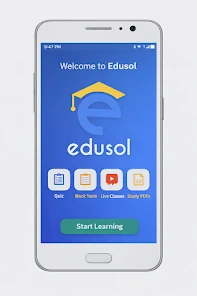
Edusol brings video courses, e-books, PDFs, quizzes and mock tests into one learning platform. Its Android app is supported by a central backend and an admin system for content, users and purchases.
Our work covered the backend, admin dashboard, Android app APIs and payment infrastructure, alongside the design and development of a new web CBT platform. The goal was to support everyday learning while opening a desktop testing experience for existing and new users.
The challenge
The platform needed to connect learning content, paid purchases and administration without making daily operations difficult for the team.
- Organise courses, videos, e-books, PDFs and physical books for Android learners.
- Support reliable payments for courses and other learning material.
- Give non-technical staff control over content, pricing, users and orders.
- Extend assessments to the web while keeping the live Android app and its existing APIs separate from the new CBT module.
The web experience also needed to feel approachable for candidates who were less familiar with computer-based tests. Clear navigation and a desktop exam format were central to the brief.
Backend and admin platform
The backend uses PHP with CodeIgniter 3 and MySQL. It powers the Android APIs, content management and commerce workflows from a shared platform.
The admin dashboard brings users, courses, videos, quizzes, mock tests, e-books, PDFs and offline book sales into one place. Staff can manage learning material and pricing, and review orders and revenue without working directly with the database.
Razorpay supports purchases across courses and content. During platform cleanup, payment credentials and controller-level payment logic were hardened and centralised to make the integration easier to manage consistently.
Firebase supports push notifications and app-delivery workflows, helping the team keep learners connected to the product.
A new web CBT experience
We designed and developed a React frontend with an isolated backend module for browser-based testing. The module reuses existing exam and course data without changing the live Android app or its APIs.
Existing Android users can sign in with the same credentials. New learners can register directly on the web without installing the app. This extends access to candidates who prefer a keyboard, monitor and desktop-style exam environment.
Test flow and integrity controls
The CBT experience includes fullscreen prompts and enforcement within browser limits, tab-switch detection, copy/paste and right-click restrictions, warning counts and activity logging. These controls help flag disruptive or suspicious activity; they do not make a browser exam cheat-proof or replace live proctoring.
The interface keeps instructions and test actions straightforward so first-time CBT users can focus on the questions.
Official attempts and practice
The first attempt is treated as the official scored attempt. Learners can then take unlimited practice retakes after results, keeping official rankings separate from revision activity.
Saved Questions lets learners bookmark questions and return to a personal review list across sessions. Practice becomes a continuing part of the learning experience rather than a one-time test.
Authentication across platforms
The web module uses bearer-token authentication for requests from the React frontend to its API across subdomains. This keeps the web-session design separate from cookie-based browser sessions while supporting the shared user account experience.
Reliability before exam windows
Backend and server-capacity load testing was conducted ahead of high-traffic exam windows. The findings informed server-configuration tuning and capacity planning.
The testing focused on preparing the platform for concurrent demand. No specific concurrency capacity or uptime figure is claimed in this case study.
Platform results
A rounded view of the platform totals from the supplied dashboard snapshot:
| Metric | Approximate total |
|---|---|
| Registered users | 91,000+ |
| Live courses | About 40 |
| Course revenue | About ₹1.68 crore |
| Videos delivered | 2,900+ |
| E-book revenue | About ₹1.77 lakh |
| Offline book revenue | About ₹50,000 |
Figures are rounded for readability; “+” indicates a lower-bound total and “About” indicates an approximation. These are platform totals, not growth attributable solely to this engagement. The snapshot date was not supplied.
The platform combines a substantial registered learner base with several content formats and purchase types. Its new web CBT product adds a desktop assessment experience alongside the Android learning app.
Technology used
- Backend: PHP, CodeIgniter 3 and MySQL.
- Mobile platform: Android, with Java/Kotlin in the app stack.
- Web CBT: React frontend and an isolated backend module.
- Payments: Razorpay.
- Notifications and app delivery: Firebase.
- Integration: REST APIs and bearer-token authentication for web sessions.
Planning an education platform?
Start with the learner journey, content structure, payment flow and admin responsibilities. Then plan how lessons, tests and practice will work together across mobile and web.
View EDU Sol on Google Play, explore Android app development or discuss your learning platform.
Turn the next step into a clear plan.
Tell us about your business and the problem you want to solve.
Discuss your project ↗